
















Taken after the musickings of Ornette Coleman and Glenn Spearman, critic Stephen Piccarella describes the practice of the “double trio” as “two jazz ensembles [improvising] at once, [continuing] this neverending dispersion outward.” Similar remarks could be attributed to rap trio Injury Reserve (comprised of Parker Corey, Jordan “Stepa” Groggs, and Nathaniel Ritchie) and their increasingly forward-thinking set of projects spanning the mid-to-late 2010s. Prior to Groggs’s untimely death in June 2020, a Stockholm DJ set found the group reimagining older sounds under a newfound post-punk and hyperpop influence. The catalyst of which would inform the production of 2021’s blistering, post-apocalyptic By the Time I Get to Phoenix, haunted by and in memory of Jordan Groggs.
Recently, I watched a performance of By Storm (fka Injury Reserve; think Joy Division into New Order) playing “Bye Storm,” fittingly their last song under the previous moniker. Countering the original’s fade-out, Parker Corey decides to continue looping and layering a sample of Brian Eno‘s “Here Comes the Warm Jets” until the song becomes a palimpsest of noise, until the system seemingly fails. This minor thought about intentionality hovered over my listening to By Storm’s formal debut, My Ghosts Go Ghost. The idea of performing failure; a renegotiating of Newtonian mechanics as wielding both order and chaos. For instance, penultimate track “And I Dance” appears as a poppy, Pitbull B-side… in the process of decay.

Eschewing the chronically online, conspiracy-obsessed crooning of past work, rapper Nathaniel Ritchie meditates on the incompleteness of the Injury Reserve project as well as fatherhood. (Acoustic-led opener “Can I Have You for Myself” includes this rather bittersweet double entendre: “Things been slow, things been sweet / Been us two, it’s finna be three”) As well, the punchiness of Reserve’s previous work, on a track like “Koruna & Lime” from their 2019 self-titled perhaps, has been phased out for more hypnagogic soundscapes. Both approximating seven minutes in length, the back-to-back placement of “In My Town” and “Zig Zag” find greater æffect in their subtle lyrical and sonic repetitions.
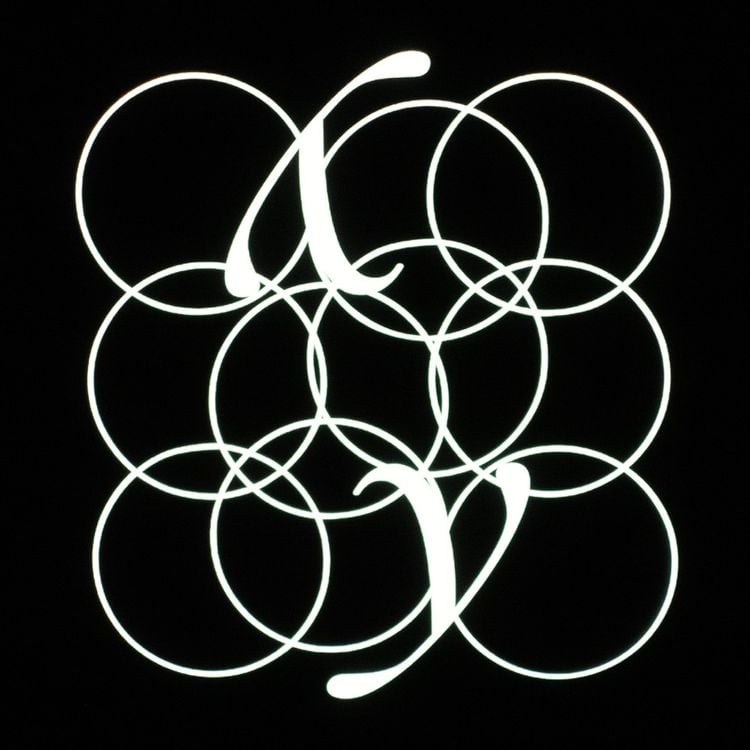
To some extent, you get the sense that this album was made without an audience proper in mind. Look no further than to the phantasmic title; the cover and its subliminal message: by(e) by(e). Is this departure directed at / from the sound of Injury Reserve, from the continued haunting / departure of Groggs? (The slashes here note the indeterminate weight of this question) Or, in the likes of theorist Éduoard Glissant, a demand for opacity from the listener entirely? Perhaps not; though the sporadic, free jazz breakdowns on “Double Trio 2,” accompanied by saxophonist Patrick Shiroshi, suggests otherwise.

A series of conflicting phrases triangulate the closing title track, compressing the five stages of grief into something resembling the “double trio” of By Storm. “Knowing where he go” and “There’s no knowing where he go” and “Don’t let me go” whirl around until the song’s abrupt full stop. Ultimately, My Ghosts Go Ghost proves quite difficult listening, leaving the listener with more questions than answers. An album of ideas, so to speak, uncompromising in its experimentation, leveling what came before and speculating what comes after. Salvation, as another interpretation of the title gestures toward, is achieved through this sort of risk-taking, and as Groggs once exclaimed, making “weird s***.”
Listen to: Double Trio 2, In My Town, Dead Weight