














When a generative AI platform was asked whether or not “AI is objectively good for the human race,” that AI responded saying, “AI isn’t objectively ‘good’ or ‘bad.’ It’s a tool, and its impact depends on how humans design, control, and use it.” When asked specifically about generative AI, it responded more or less the same.
However, when asked whether we are currently using it in a harmful or healthy way, it responded, “We’re using AI in a mixed way–but leaning slightly unhealthy in some areas.”
So, where does that contradiction arise?
According to the generative AI platform, positive patterns are shown through “learning support,” increased “productivity and creativity,” and “accessibility.”
But the AI also pointed out that, in contrast, people have begun to replace “thinking instead of supporting it,” forming an “overreliance” on artificial intelligence, leading to “creative burnout.” Not only that, but “misinformation” that can be spread through biased AI platforms has become a “gray-area ethics.”
These are simply the conclusions, which can prove unreliable, drawn by the artificial intelligence platforms themselves.
To get true, authentic information, we have to seek out different sources. When searching for reliable information about AI, it’s helpful to consult numerous expert opinions, reputable news outlets, and academic publications. One useful trick is to cross-check AI-generated claims with multiple trustworthy sources to verify their accuracy before accepting or sharing them with others.
What is Artificial Intelligence?
For the past few years, the term AI has been thrown around excessively as the new technology has been introduced into everyday life. Currently, AI is so rooted in day-to-day life that you no longer need to seek out an AI source. It is embedded in search bars, social media, websites, and sometimes even home appliances. But how much do we really understand it?
Artificial intelligence itself is defined by Congress as “a broad term referring to algorithms and techniques that aim to give computer systems the ability to learn new concepts or tasks and to reason and solve complex problems in a manner that mimics human intelligence.”
The two main types of artificial intelligence are weak (narrow) AI and strong (general) AI. However, it is important to note that all AI systems in use today are examples of narrow AI. Narrow AI is designed for specific, defined tasks such as facial recognition, using digital assistants like Siri, or operating self-driving cars. In contrast, strong or general AI – also known as Artificial General Intelligence (AGI) – refers to AI that can understand and learn any intellectual task that a human could, and, in theory, could outperform humans at those very tasks. AGI is only a theoretical concept and does not yet exist. All current high-profile AI applications – including autonomous vehicles, medical diagnoses, generated art, video game play, search engines, online assistants, image recognition, spam filtering, and flight delay predictions – are forms of narrow AI.
One important subset of AI is Machine Learning (ML) – a form of narrow AI. ML, as explained by Congress, “focuses on developing systems that can learn… from data without explicit programming.” Moreover, “it is a group of systems that is defined in part by the type of information used to train the model and the amount of involvement provided by human trainers.” To summarize, Machine Learning trains artificial intelligence to comprehend data and apply problem-solving skills.
Another subset that has become very prominent is generative AI – another form of narrow AI. Generative AI is simply used to generate content – whether that be written material, art, or computer code – in response to prompts given by users. In general, generative AI is under the most scrutiny today.
Educational Impact
Many teachers worldwide have noticed that generative AI is dominating their classrooms. According to the Nonprofit Center for Democracy and Technology, 85% of teachers and 86% of students used AI in the 2024-2025 school year.
Half of students agreed that using AI in class created a feeling of disconnection from their teachers – this disconnect concerned 47% of teachers and 50% of parents. 70% of teachers worry that AI weakens students’ critical thinking and research skills.
71% of teachers have said that the increased use of AI in students’ work can make it difficult to tell whether their students’ submissions are turly original.
However, many teachers also see AI as a positive tool in their job; in fact, 69% of teachers have said that AI allows them to engage in more personal learning; and 55% have said that AI has given them more time to interact with their students.
Robbie Torney – a senior director of the AI program at Common Sense Media (a nonprofit that studies the effects of media and technology on kids) – sees artificial intelligence as a beneficial tool for teachers. He says it can help them complete monotonous administrative tasks sooner. In contrast, he believes that in regard to students, there “isn’t any guarantee they can use AI to learn faster.”
AI in schools comes with the potential for large-scale data leaks, tech-fueled sexual harassment, and the unfair treatment of students.
All of these negative impacts could be mitigated with more proper AI training and policies that protect these students, but these defenses are rarely implemented.
For example, schools could introduce digital literacy classes that teach both students and teachers how to use AI tools responsibly. Effective policies might include clear guidelines on the appropriate and inappropriate uses of AI, designated times for AI-assisted work, and methods to verify the originality of assignments. Some schools have begun offering regular workshops on recognizing AI-generated content or have established procedures for reporting misuse. These potential solutions could help ensure that technology supports learning rather than undermining it.
With most students and teachers using artificial intelligence, it seems important for training to become a common – if not mandatory – practice. However, only 48% – less than half! – of schools and districts receive any guidance.
29% of teachers said that their AI training included how to properly use tools, 25% said it defined what AI is and how it works, and 17% said that it included how to monitor and check AI systems.
22% of students received guidance on school policy regarding AI use, 17% learned about the risks of AI use, and only 12% learned what AI is and how it works.
Students themselves can also play an active role by requesting digital literacy classes, joining or forming school technology committees, and advocating for stronger policies on AI use. By taking initiative, students help create environments where technology is used safely and thoughtfully while having a voice in shaping how AI is used in their schools.
Debate on Art
The hindrance to creative jobs posed by artificial intelligence has become a heavily debated, morally ambiguous subject. Now, with the push of a finger, entire novels can be drafted, eloquent paintings created, and intricate sculptures designed.
What will the effect of this new technology bring onto society?
The first question we should be asking is whether artificial art would ever be accepted by humans. Until now, history has shown that humans place great importance on the individual artist and react negatively to forgeries.
In fact, children have been proven to value an original object over an identical one if they believe that it was made by a replicator.
Humans value the purpose behind artwork more than the techniques used to create it. Additionally, art can foster a sense of community that artificial intelligence can’t replicate.
This is evident in the historical popularity of religious artwork, which convey spiritual messages: Indigenous cultures using art and rituals, Christianity portraying gaunt forms of Christ on the crucifix, the Khajuraho temples depicting sensual carvings, and even Congo sculptures with human forms impaled with nails. All of these forms of art serve communal purposes.
The concept of L’art pour l’art arose as a reaction to art’s secularization because those communal, ritualistic functions were erased form art. Art is do deeply rooted in culture that removing it leads to revolt. L’art pour l’art on its own proves that art is prized based on intention rather than the effort or technique used to create it.
While art has been praised in the past for its individuality, that may no longer be the case in the future.
AI art has been heavily criticized online, but just as many people have used it to their benefit. Photos generated with AI have been posted online to be passed off as original work. Books written entirely with artificial intelligence have been published and are currently generating income for people who put in no more effort than entering a prompt into a generative AI source. Songs such as “Walk My Walk” by the imaginary artist Breaking Rust reached No. 1 on the Country Digital Song Sales chart for November 2025, gaining over three million streams. Even an AI actress – Tilly Norwood – has been created to perform in movies and TV shows.
As time progresses, artists grow nervous that their jobs are in danger. If someone could put significantly less time and money into something and still produce a piece equivalent to, or even better than, organic art, the artwork’s value would decrease significantly.
The concept of all artwork and media – TV shows, books, movies, music, paintings – being manufactured by artificial intelligence feels dystopian.
As of now, AI art is still nowhere near human skill, and humans are not yet at the point of acceptance. But just as with many other technological advances, this could change in the future.
This raises important questions about the role of technology in creativity and culture. How do you value art created by humans compared to that generated by artificial intelligence? In what ways might synthetic art enhance or diminish our experiences? By answering these questions, we decide how humans will respond to synthetic art in the future.
Environmental Effects
Artificial intelligence has proven harmful to the environment.
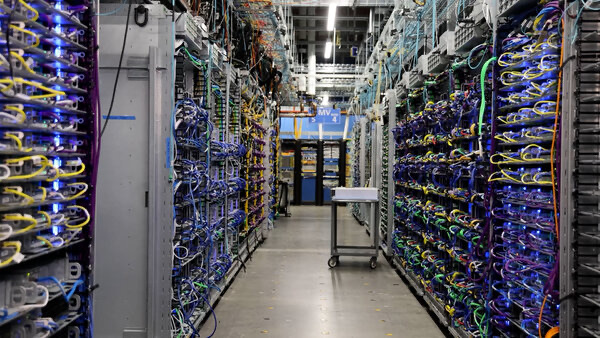
Their data centers require immense amounts of materials, many of which are rare-earth elements, which are mined in destructive ways.
They also generate a large amount of electric waste, including hazardous materials, such as mercury and lead.
Data centers use a lot of water during construction and to cool electrical components. According to the United Nations Environment Assembly, “globally, AI-related infrastructure may soon consume six times more water than Denmark, a country of 6 million.” This isn’t to mention the billions of people around the globe who already lack access to clean drinking water and sanitation.
Lastly, data centers require a lot of energy, mostly generated by burning fossil fuels, which produce more greenhouse gases. The International Energy Agency reported that a request made through ChatGPT, an AI-based virtual assistant, consumes 10 times as much electricity as a Google search. It also estimates that the rise of AI data centers could account for 35% of the country’s energy use by 2026.
The AI centers had increased from 500,000 in 2012 to 8 million as of late 2024.
Other issues could arise from more widespread use of AI. For example, AI-powered self-driving cars could reduce the number of people who choose to ride a bike or take public transit, thereby raising greenhouse gas emissions. AI could also be used to spread misinformation, downplaying the threat of climate change.
But there are also positive effects of artificial intelligence on the environment. AI is known for its ability to detect patterns in data, enabling it to monitor the environment and help governments develop more planet-friendly policies.
“More than 190 countries have adopted a series of non-binding recommendations on the ethical use of AI, which covers the environment” (UNEP). While many of these laws are not all-encompassing and still allow abuses of AI, steps are being taken to be more environmentally aware in its use.
Moving Forward
AI has become a part of everyday life, and it doesn’t seem to be going anywhere. The Federal Reserve Bank of St. Louis stated that the diffusion of AI appears to follow patterns similar to those seen during the adoption of personal computers and cloud computing. The takeover will not be fast or sudden – AI will integrate itself slowly into our everyday lives over decades. In just a few years, we have gotten used to it, and many have accepted it and begun using it as a tool.
Artificial intelligence has proven scary, and the future remains largely unknown. Jobs may be lost, creativity and critical thinking skills may be diminished, and the environment may be harmed by the immense power required to run it. It has also proven difficult to track, as evidenced by the large number of teachers who cannot distinguish human-written essays from computer-generated ones. Although it is getting slightly better.
When I entered this article into an AI checker – aside from the quotes in the beginning from a generative AI source, this article was not written with any AI – it came back as 8% AI-generated. When I entered the last article I wrote for the Patriot Newspaper – also not written with AI–it came back as 15% AI-generated. I then asked ChatGPT to write an article on the same topics as this one. That essay turned out to be 77% AI generated. However, when I gave ChatGPT this exact article (up until this point) and asked it to heavily edit it, the edit was said to be only 23% AI.
Recognizing AI-generated sources and information is slowly improving, but AI is progressing alongside it. We still struggle – even with AI-detecting tools – to be completely sure whether something is AI-generated. Just as we saw that no percent was 100% or 0% (even though a few could fall into one of those categories), it is nearly impossible to tell for certain whether something is AI-generated.
This means we need to be more aware of the potential for AI use and double-check every piece of information we find online against reliable sources (author credentials, reputation, institutional affiliation) to ensure what we are seeing and learning is accurate.
You will be fooled by fake photos online. You will come across fake information. Biased answers will be given to you through poor AI sources. But it is important to be aware of these possibilities to combat them.
The best way to make a change is to spread awareness. AI is here to stay, but it is up to us to decide how best to use it.