















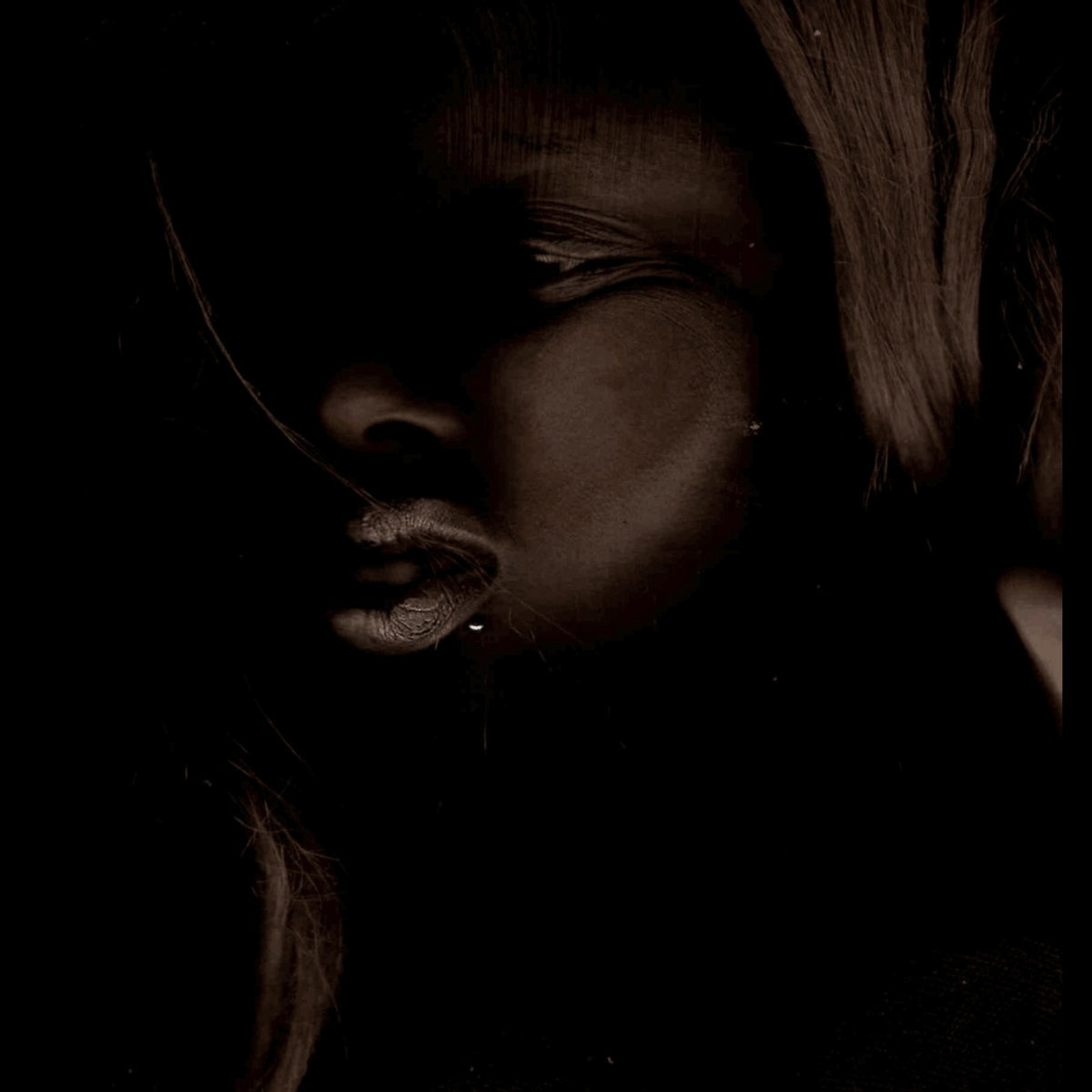
In Stella Wong’s poetry collection Stem, a suite of “dramatic monologues” provoke a murmuration of femme electronic musicians, a motion toward a future canon: “The best // things to score are / like us, unnumbered,” goes composer Wendy Carlos. I’m trying to imagine Klein’s dramatic monologue. Watching a lecture the South London composer presented on “craft” at the Städelschule derails into an autohistoriographical meditation on Black aliveness, the UK grime scene, and the first time she met Ed Sheeran. sleep with a cane, her latest mixtape, similarly attends to the listener with ostensible care. At once, an “affective proximity” (John Akomfrah) appears in presentation and discursion to form compositions more total than linear.
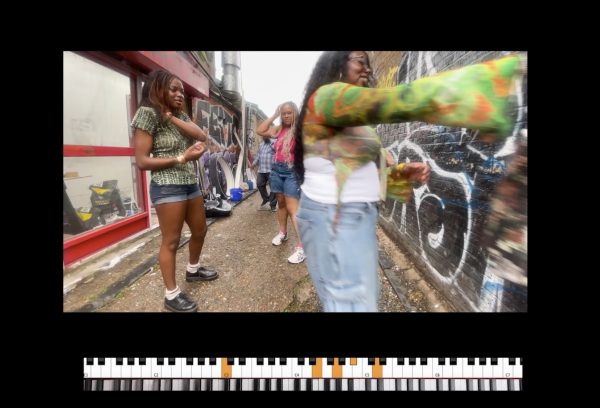
Last year, Klein seemed to make a pivot toward industrial metal with the releases of marked and thirteen sense. However its sludge exterior, the excess of digitally-compressed guitar chords lent itself to a surprising pop-rock sensibility. Thus, it was surprising to hear opener “84 remy,” with its feedback loop of pillowy synths and flutes. On “informa,” a BBC anchor reports that “London youth are quickly leaving violence behind to embrace the emerging cultures of artistry, creativity, and independence.” A tone of pacifism arises once more as song titles (“iluvlife [2012],” “Family Employment 2008-2014”) correspond with Klein’s childhood before she began publishing music to Bandcamp under the titular alias. However, this gesture to the archive as a form of resolution leaves its contents often floating about and around silence. Was this manipulation on her behalf; a critique of the archive’s entrapments?
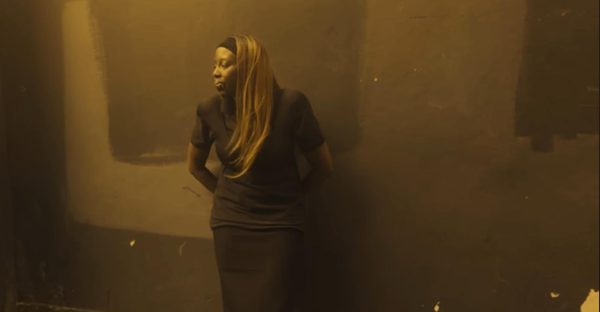
At once, I am reminded of the photographs taken by the Farm Service Administration [FSA] during the Great Depression. If any subject was deemed deviant from the American fantasy, FSA head Roy Stryker would advise constituents to hole-punch the negatives and discard of them, leaving literal and metaphorical holes in the archive. Klein makes sense of the medium’s impossibility, historical narrative writ large, by inviting myth and speculation. On “rich dad poor dad,” she embodies the blues as musical form and metonym, re-enacting the “crossroads” where Robert Johnson sold his soul to the devil in exchange for an abundant career. To fill in the gap of her own archival (abundant) project, the slippage in the final verse (is she asking to “stay again” or “say again”?) indicates that the hole remains, the message misconstrued. But what can a hole do beyond its denotation of negation? Perhaps lack is the starting point; where, from William Pope.L’s performance piece Hole Theory:
Miracles abound
Planets go crazy
Babies laugh
Friends and families die
And the sun rises
And sets (13.2)
Holes as nothing. Holes as everything. Holes as trash. Holes as beautiful. Holes as stupid. Holes as grief. Holes as theory. Holes as joy. Holes as im · possible. The holes are the shape (of Klein).
Listen to: young, black and free [with Ecco2k], rich dad poor dad, it is what it is in d minor